Inventory Management for Grocery & FMCG Distributors: How to Keep Products, Orders and Stock Organized
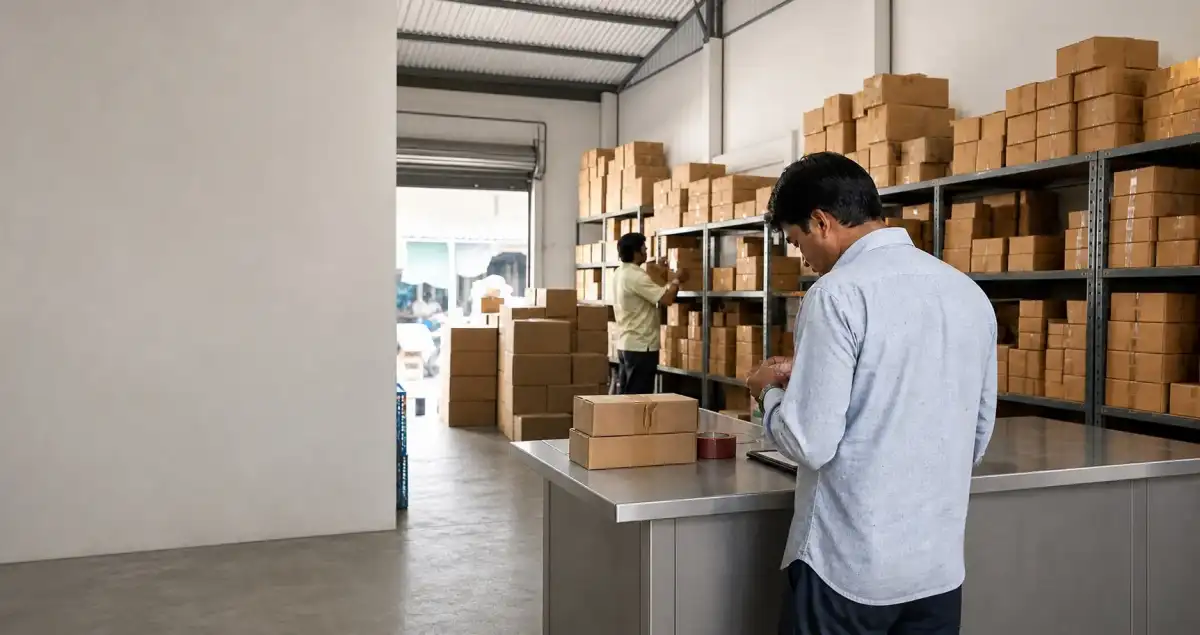
As a grocery or FMCG distribution business grows, inventory becomes harder to manage.
It is no longer just about knowing how many cartons are in the warehouse. The bigger challenge is keeping product information, stock availability and customer orders accurate and connected.
For grocery wholesalers, FMCG distributors, super stockists and regional suppliers managing large product ranges, even a small mismatch in stock information can affect sales, warehouse operations and order fulfilment.
Why Inventory Becomes Difficult as the Business Grows
A smaller distributor may be able to manage stock using spreadsheets, phone calls, WhatsApp messages or handwritten records. That works only up to a point.As the number of products, customers and orders increases, information starts moving between too many places. One person may update a spreadsheet while another takes an order over the phone. The warehouse may know that a product is almost out of stock, while the sales team still sees it as available. The real issue is not always the stock itself. It is often that the right information is not available to the right person at the right time.
Keep Product and SKU Information Consistent
Grocery and FMCG distributors usually manage a large product range.
A single category can contain different brands, flavours, pack sizes, quantities and selling units. As the catalogue expands, maintaining every SKU correctly becomes more difficult. A structured product system should make it easy to maintain important details such as product names, SKUs, categories, pack sizes, selling units, current availability and stock quantities.The more consistent this information is, the easier it becomes for sales teams, warehouse staff and customers to understand what is actually available.
Make Stock Availability Clear Before the Order Is Confirmed
One of the most frustrating situations in wholesale distribution is confirming an order and later discovering that part of it cannot be supplied.
For example, a retailer may order 20 cases of a product. The salesperson accepts the order, but the warehouse later finds that only 8 cases are available. Now the order has to be changed. The customer may need to be contacted again, a substitute may need to be offered, or delivery could be delayed. A better inventory process makes availability visible when the order is being placed, not after it has already reached fulfilment.
Connect Orders With Inventory
Inventory and order management should not operate separately.
If orders are managed in one place and stock in another, the team has to keep checking and updating both manually. That increases the chance of mistakes and outdated information.A better workflow keeps product details, stock availability, customer orders, fulfilment and inventory updates connected within the same process.
When an order is confirmed, it should become part of the inventory workflow. This makes it easier to understand what stock is still available, what has already been committed and what may need replenishment.
Reduce Orders for Unavailable Products
Customers and sales teams should be able to identify unavailable products early.
If a product is out of stock or running low, that information should be visible before someone spends time placing or confirming an order. Better visibility can reduce order changes after confirmation, repeated calls to the warehouse, last-minute substitutions, partial deliveries and customer frustration caused by unavailable items.
The aim is simple: make stock availability easier to understand before it turns into an order problem.
Manage Fast-Moving and Slow-Moving Products Differently
Not every product moves at the same speed.Some grocery and FMCG products may sell every day. Others may remain in stock for weeks or months.That means distributors should not look only at total stock.Fast-moving items need closer attention because they can run out quickly. Slow-moving products need a different kind of attention because too much stock can remain tied up for too long. Analytics can help distributors understand which products are moving quickly, which items are selling slowly, where replenishment may be needed and where stock is staying longer than expected.This makes inventory planning more useful than simply checking what is currently in the warehouse.
Avoid Running the Business From Too Many Separate Records
Spreadsheets, WhatsApp and phone calls are useful tools.
The problem starts when they become the main place where important inventory information is stored.
If stock is in one spreadsheet, orders are in messages and customer details are somewhere else, employees spend more time checking information manually.That makes it easier for outdated information to stay in circulation. A more structured approach is to keep the core information around products, inventory, customers and orders in one connected workflow. This does not mean every communication tool has to disappear. It simply means the business should have one reliable place to check the information that matters most.
What a Better Inventory Workflow Should Include
For a growing grocery or FMCG distributor, inventory management should connect several parts of the operation.
Product management helps keep product names, SKUs, categories and pack information organised.
Inventory control provides clearer visibility into current stock and product availability.
Order management connects customer orders with available inventory and helps the team make better fulfilment decisions. Customer management keeps order activity connected to the customers placing those orders.
Analytics helps the business understand product movement and identify stock that may need attention.
These are the same areas where the source pack identifies a natural connection with Slot Store: Product Management, Inventory Control, Orders, Customer Management and Analytics.
Inventory Management Is Really About Better Visibility
A stock problem in the warehouse can quickly become a sales problem, an order problem or a customer-service problem. That is why inventory management should not be treated as an isolated warehouse task.
The sales team needs to know what can be sold. The warehouse needs to know what has already been ordered. Customers need clearer information about what is available. Management needs to understand which products are moving and which are not. When this information is connected, the business can make decisions faster and with more confidence.
How Slot Store Fits Into This Workflow
Slot Store can support grocery and FMCG distributors by bringing product management, inventory control, orders, customer management and analytics into a more structured digital workflow. Instead of relying entirely on separate spreadsheets, messages and manual records, businesses can organise products, stock and orders in a way that is easier to manage as they grow.Businesses can explore Slot Store’s inventory and product management features, solutions for grocery businesses and grocery business analytics to understand how these areas can work together.
Conclusion
Good inventory management is not about checking stock more often.
It is about making sure products, stock and orders stay connected as the business grows.
When teams can see reliable product and availability information at the right time, they spend less time checking records, correcting orders and chasing updates. For grocery and FMCG distributors managing a growing product range, that kind of visibility can make day-to-day operations much easier.
Explore Slot Store to see how a more structured approach can help keep products, inventory and orders easier to manage.
Explore Slot Store → https://goslot.store/